Low price guarantee
55.000 products
ready for shipment
Money Back
30 Day Return Policy
You have placed the following items into your shopping cart
Low price guarantee
55.000 products
ready for shipment
Money Back
30 Day Return Policy
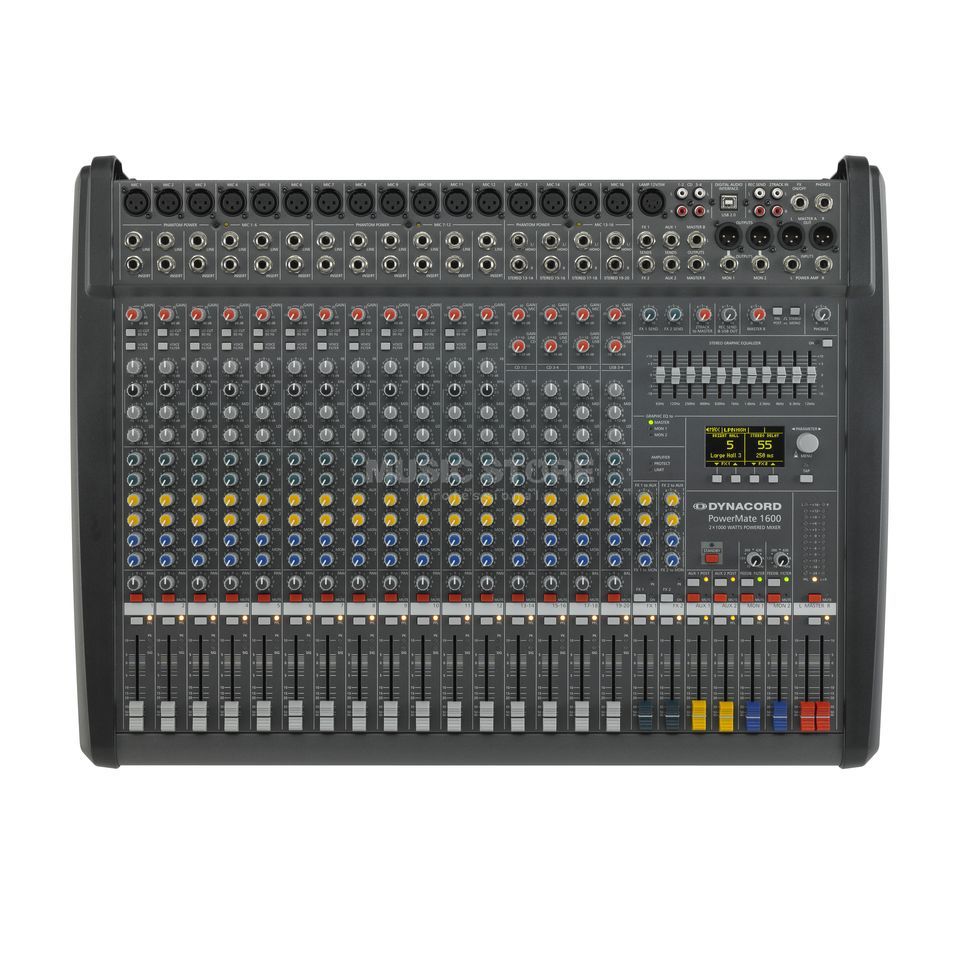
A powered mixer combines a mixing console and power amplifier in one unit. This allows microphones, instruments and playback sources to be mixed while passive PA loudspeakers are driven directly. This makes powered mixers especially useful for rehearsal rooms, small gigs, club events, schools and mobile PA setups. Compared with a setup made up of a separate mixer, power amplifier and additional cabling, the overall system remains more compact and easier to manage. Many models also offer tone control, onboard effects, microphone inputs, phantom power or USB functions. If you are specifically looking for units with integrated amplification, the powered mixers with power amplifier subcategory offers a suitable selection. Powered mixers are suitable wherever a PA setup needs to be set up quickly, transported easily and operated without a separate power amplifier. Typical applications include band rehearsals, smaller stages, speech reinforcement, club and school events, mobile moderation or simple setups with passive loudspeakers. For bands and small live line-ups, enough channels, robust microphone inputs, vocal effects and sufficient power headroom are important. For speech, presentations and smaller events, simple operation, clear intelligibility and suitable inputs for microphones, playback sources or wireless systems are often the main priorities. One unit handles signal mixing and loudspeaker power, keeping the setup compact. Fewer separate devices and less cabling make rehearsals, small gigs and mobile use easier. Microphones, instruments and playback sources can be mixed; effects such as reverb can be useful live. The powered mixer supplies passive speakers directly with power, provided impedance and power handling match. Powered mixers mainly come in two formats. Console-style models are visually and practically based on traditional mixing consoles. They often offer many channels, faders, aux sends and a spacious control surface. Box-style powered mixers, on the other hand, are especially portable, robust and quick to set up. Suitable for users who prefer a classic mixing console layout with faders, channel strips and a clear overview. Practical for mobile applications, fast operation via rotary controls and compact storage in a car or case. When buying a powered mixer, the mixer section and amplifier section should be considered together. The key questions are how many signals need to be processed, which loudspeakers will be connected and how loud the system needs to be in the intended application. Count microphones, instruments, stereo sources and playback devices, and plan a little extra capacity. Power should suit the room size, music style and loudspeakers without the system constantly running at its limit. Powered mixer and loudspeakers must match electrically; pay attention to ohm ratings and power handling. Reverb, EQ, phantom power and USB functions may be important depending on microphone type, vocals and recording needs. Loudspeaker matching is particularly important: a powered mixer is usually designed for specific minimum impedances. If too many speakers are connected or combined incorrectly, the amplifier section can be overloaded. Always check the power and impedance specifications of both powered mixer and loudspeakers. A powered mixer setup often also requires suitable speaker cables, stands, cases or other accessories. In the powered mixer accessories category you will find suitable additions for transport, cabling and operation with passive loudspeakers. If no PA equipment is available yet, complete sets with powered mixer, passive loudspeakers and cables can be a practical solution. Such sets save time during selection and help bring the most important components together in a compatible setup. A powered mixer combines a mixing console and power amplifier in one unit. It mixes signals from microphones, instruments or playback sources and can drive passive PA loudspeakers directly. A standard mixing console mixes signals but requires a separate power amplifier for passive loudspeakers. A powered mixer has the amplifier already built in and can supply suitable passive loudspeakers directly. Powered mixers are generally intended for passive loudspeakers. It is important that impedance, power handling and output power of the powered mixer and loudspeakers match. The powered mixer’s minimum impedance must not be exceeded downward. Too low an ohm value or incorrectly combined loudspeakers can overload the amplifier. Power and impedance specifications should therefore always be checked together. This depends on the number of microphones, instruments and playback sources. A few channels may be enough for simple speech or rehearsal room setups, while bands or several vocal microphones benefit from more headroom. 48 V phantom power is required for many condenser microphones. Effects such as reverb are useful for vocals, while USB functions can help when music is played back or simple recordings are needed.
Buy powered mixers – mixing console and power amplifier in one unit
What is a powered mixer?
What are powered mixers suitable for?
Mixer + amplifier
Fast setup
Inputs & effects
Passive speakers
Console format or box format?
Console format
Box format
What should you consider when buying a powered mixer?
Channels & inputs
Power & headroom
Impedance & speakers
Effects & 48 V
Powered mixer accessories and sets
FAQ – powered mixers
What is a powered mixer?
How does a powered mixer differ from a standard mixing console?
Which loudspeakers work with a powered mixer?
What should I consider regarding power, ohms and impedance?
How many channels should a powered mixer have?
When are 48 V phantom power, effects or USB useful?